Geopolitical Shifts Are Shaping Markets in Eastern Europe
How do geopolitical crises affect businesses? This question was at the center of a high-level panel discussion held on May 12 in Vienna. At the invitation of Canon Austria, the Eastern Committee of German Business, and LM Political Risk and Strategy Advisory, representatives from the business community and corporate sector came together to shed light on current developments and their implications.
The discussion focused on growing tensions in international trade – but also on the opportunities arising from them. One key takeaway was clear: today’s conflicts are not isolated events, but part of a profound global transformation. The world economy is increasingly moving away from a purely efficiency-driven model toward an order in which security considerations play a central role. For companies, this means greater fragmentation, new trade barriers, and stronger political intervention in economic decision-making.
At the same time, it was emphasized that Eastern Europe continues to offer attractive growth prospects despite these challenges – particularly in trade and investment. However, capitalizing on these opportunities requires a clear-eyed approach to risk: geopolitical developments must be actively managed, and trade compliance must be given greater priority.
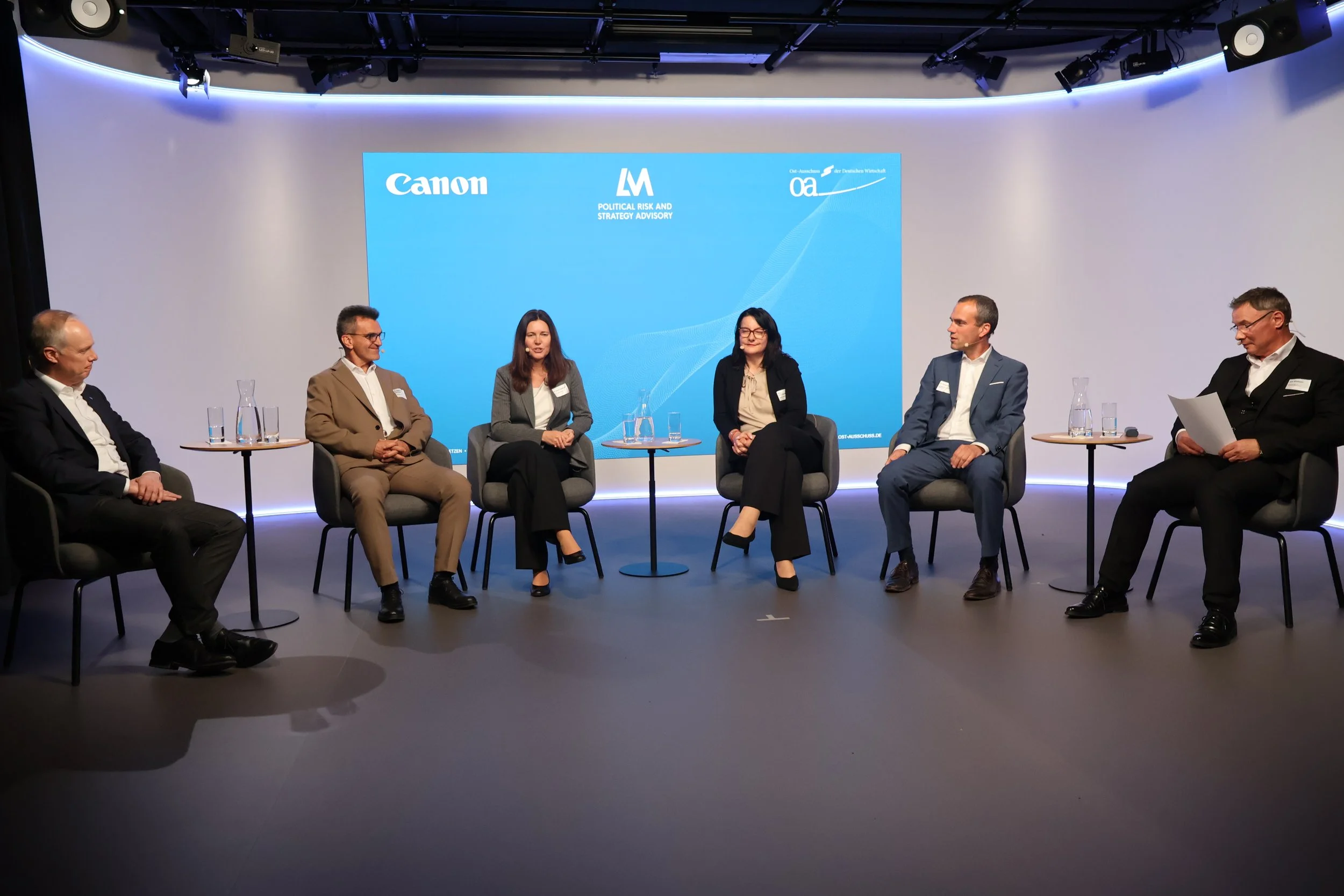
Dr.Hannes Meissner at the panel discussion