The impact of the Taliban on Central Asia and the Southern Dimension of the “Middle Corridor”
Workshop at the Austrian National Defence Academy on Security in South and Central Asia
Managing Partner Dr. Hannes Meissner gave a presentation on "The Impact of the Taliban on Central Asia and the Southern Dimension of the 'Middle Corridor'" at the Institute for Peace Support and Conflict Management (IFK) at the Austrian National Defence Academy on 2 June. The workshop dealt with the current security situation in South and Central Asia. The discussions focused in particular on the recent escalations between the Taliban and Pakistan in March 2026, as well as the Iran–Israel/USA confrontation and its impact on the regional security architecture. Please follow this link to the presentation.
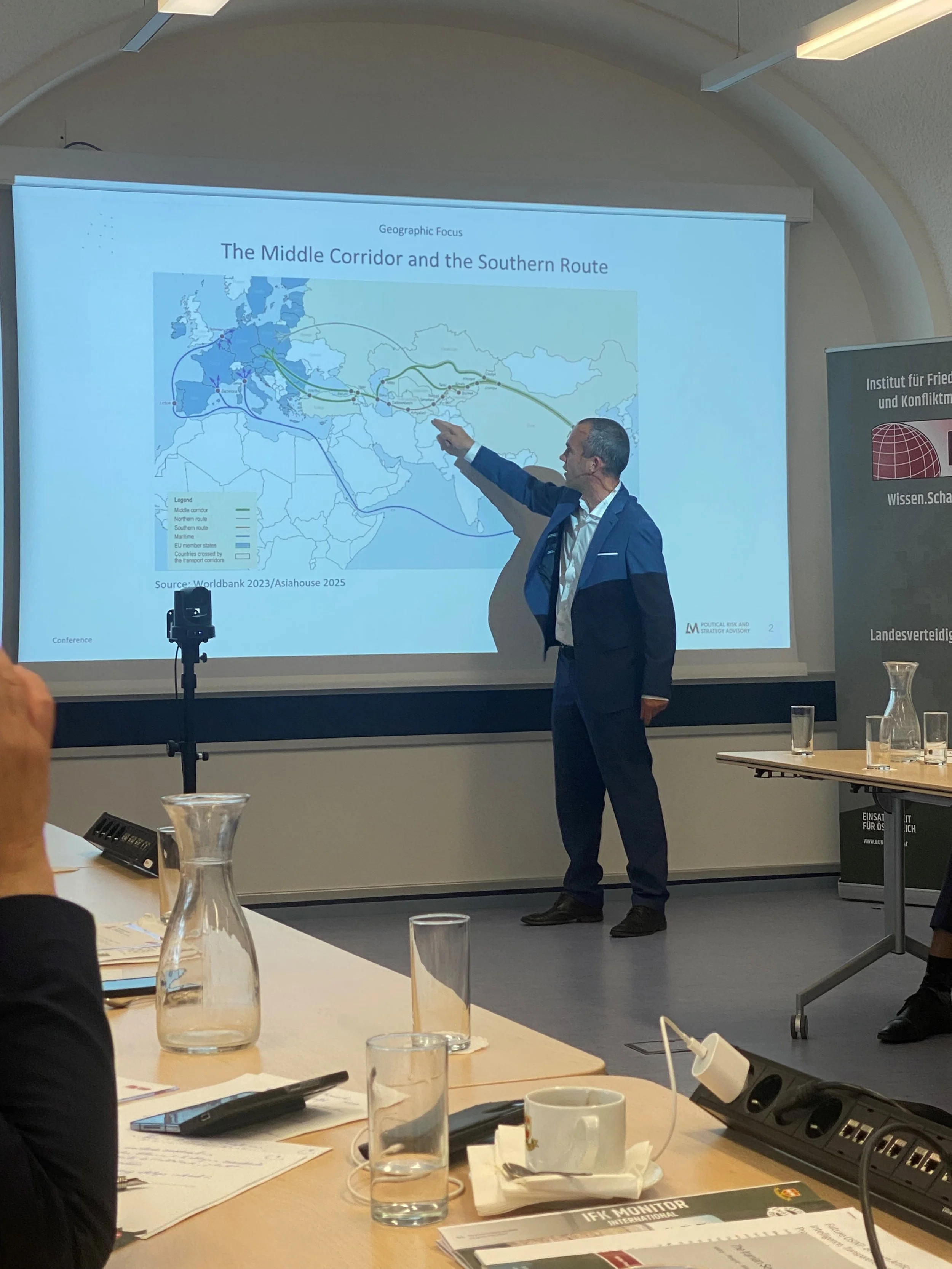
Dr.Hannes Meissner at the Austrian National Defence Academy